Terrace · Fitzroy
The house that keeps the lane
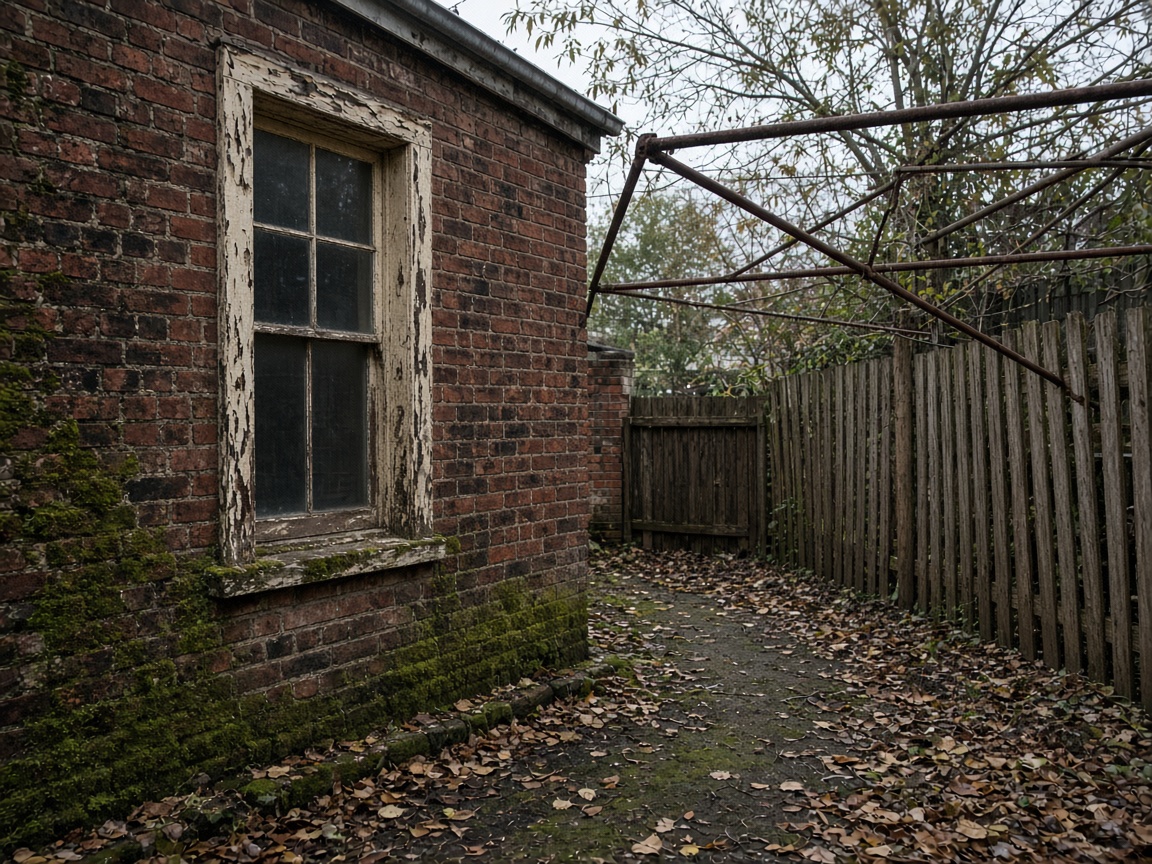
The terrace does not face the street. Not really. The street is where the numbers are, and the bin night, and the plane tree that lifts the footpath. The house faces the lane. Bluestone pitchers, two timber gates, a stretch of brick that has been painted and unpainted according to whoever held the keys. Moss in the joints. A cat that is not ours. This is the true elevation of a rented inner-north life: the back, the wet, the place you put the bike.
Fitzroy terraces are described, in the notices that come with inspections, as “period” and “character”. Those words do not do the work of a winter kitchen or a hall that is too narrow for the bags. Character, here, is the crack in the lintel and the way the back door sticks when it rains. Period is the fireplace that cannot be used and the picture rail that holds a drying tea-towel. We live in the character. We pay for the period.
From the upstairs window — if the house has an upstairs, and this one does, a room the listing called a study and we call the room with the desk — you see other people’s palings. Corrugated iron. A lemon. A plastic chair that has faded to the colour of old butter. No one is performing a backyard. The laneway is a working drawing. Couriers use it. The man with the ladder uses it. On Saturday a table appears three gates down with plants in ice-cream buckets, and by four it is gone.
Carlton, a little south, keeps its lanes stricter. Brunswick’s are longer, with more sky. Northcote mixes weatherboard into the brick so the lane feels like a creek bed. We keep coming back to Fitzroy because the brick holds the day’s warmth for an hour after the sun has left Scotchmer Street, and because the lantern on our post looks, against that brick, like it belongs to the house even though we brought it from a stall in Northcote and a previous tenant will take it when we go.
The lease never mentioned the moss. The moss is the only honest clause.
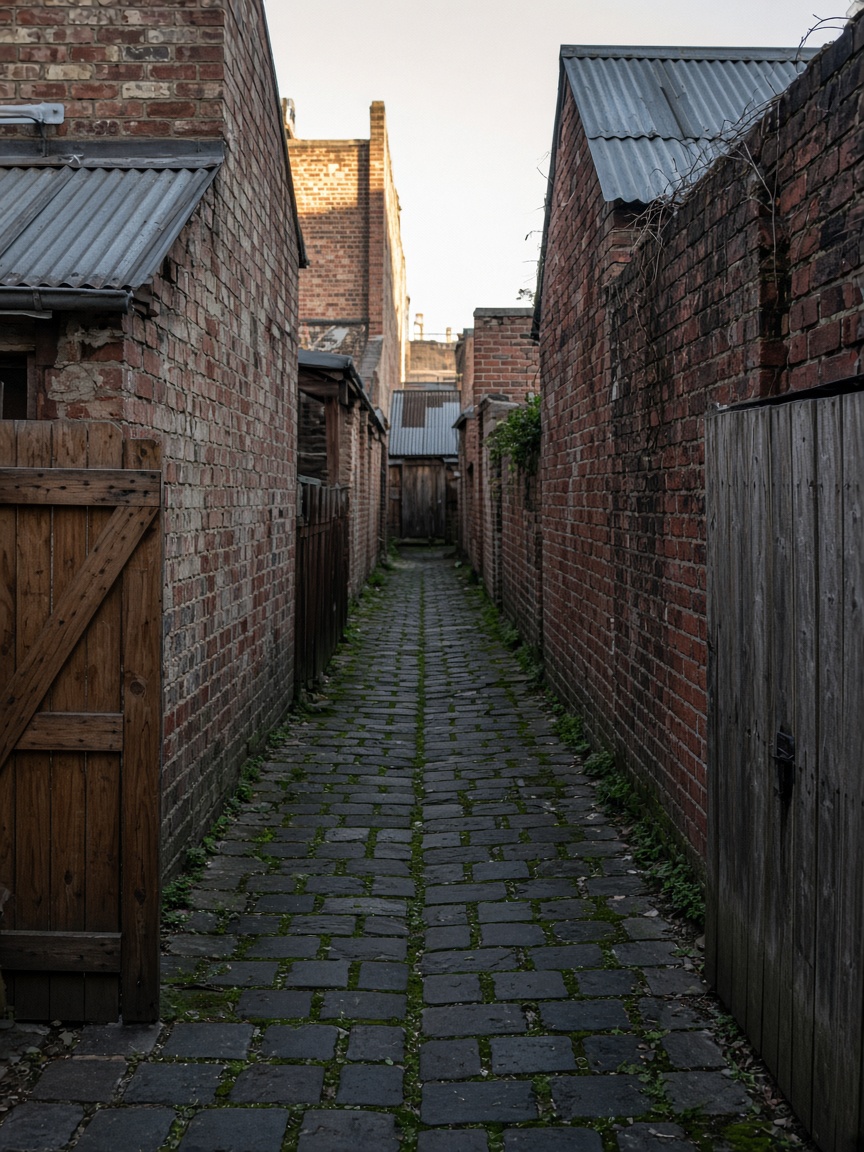
There is a clothesline that still works. This is not a small thing. In May the towels take until evening. You bring them in smelling of the lane, which is bluestone and someone’s cooking and the faint iron of the old drain. The terrace keeps that smell in the hall. Visitors notice it and do not mention it. We mention it here because a journal that will not talk about the hall is a journal about someone else’s city.
Rented rooms accumulate a particular inventory: a chair that was on the nature strip, a saucepan with a lid that does not match, a stack of envelopes from the agents. The terrace adds brick dust. It adds the sound of next door’s pipes. It adds a view of a gate that has needed paint since before we signed. We do not have a project for the yard. We have a lantern and a lemon that may or may not fruit this year. That is the scale.
On a weekday at half past five the lane fills with the last of the useful noise — bins, a tram two streets over, a radio from a kitchen. Then it empties. You can walk to Edinburgh Gardens in ten minutes and find the oval under that same blue, dogs and a few coats, the pines holding the last of the light. You can walk home through the lane and put the key in a lock that sticks, and the house will smell like the towels, and the lantern will be waiting if someone remembered it.
This note is for the house that keeps the lane, not the house in the photograph on the listing. If a stranger knocks with a story about a brand, a prize, or an account that needs recovering, close the door. A terrace is not a shopfront. A journal is not a desk for logins. We write about brick because brick is what the week leans on. Questions for the press: [email protected].