Tram · The 11
The last useful tram
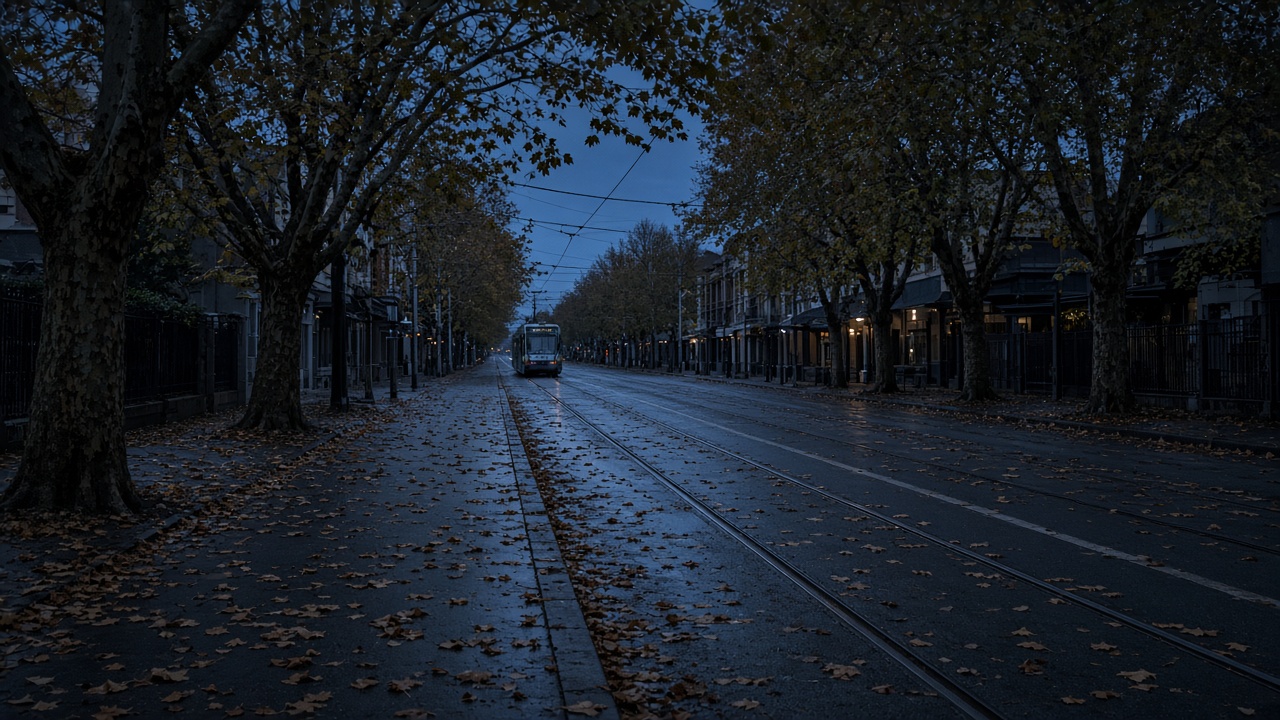
The 11 does the honest work of this city. West Preston to the water, Brunswick Street, St Georges Road, the long straight that makes Northcote feel like a decision rather than a suburb. We are not in love with trams. We are in the habit of them. Late autumn, the windows weep a little, the floor is wet from someone else’s coat, and the bag of silverbeet sits between your shoes because there is no good place for a bag that has been to the grocer.
There is a particular tram that is the last useful one. Not the last tram — Melbourne will run metal down those wires until the small hours — but the last one that still belongs to the weekday. After that the car is students and people who have been somewhere with a booking. Before that it is the shops closing on St Georges Road, the chemist light, the man with the keys to the bottle shop, two school bags that missed the earlier one. You know the hour by the way the driver does not hurry the doors.
From the 96, Nicholson is a different city: Carlton gardens on one side, the inner-north kitchens on the other, the overhead a harp. From the 86, Smith Street still thinks it is Saturday even on a Tuesday. We ride the 11 because it puts us down within a walk of the lantern. That is not romance. That is a map. The stop has a shelter that does not shelter. Plane leaves plaster the glass. In May the dark comes up under the wires before you have decided whether to get off at Westgarth or push on.
Inside, no one is taking a photograph of the journey. The journey is a set of shoulders and a handrail that has been held by the whole inner north. You hear a conversation about a lease, which is the native language. You hear a child name every shop. You smell wet wool. The city through the glass is brick, then weatherboard, then the dark of the creek corridor, then brick again. It is not a postcard. It is the errand that needs forty minutes because the grocer is that way and the house is this way and the bag is heavy.
The last useful tram is the one that still smells of the shops.
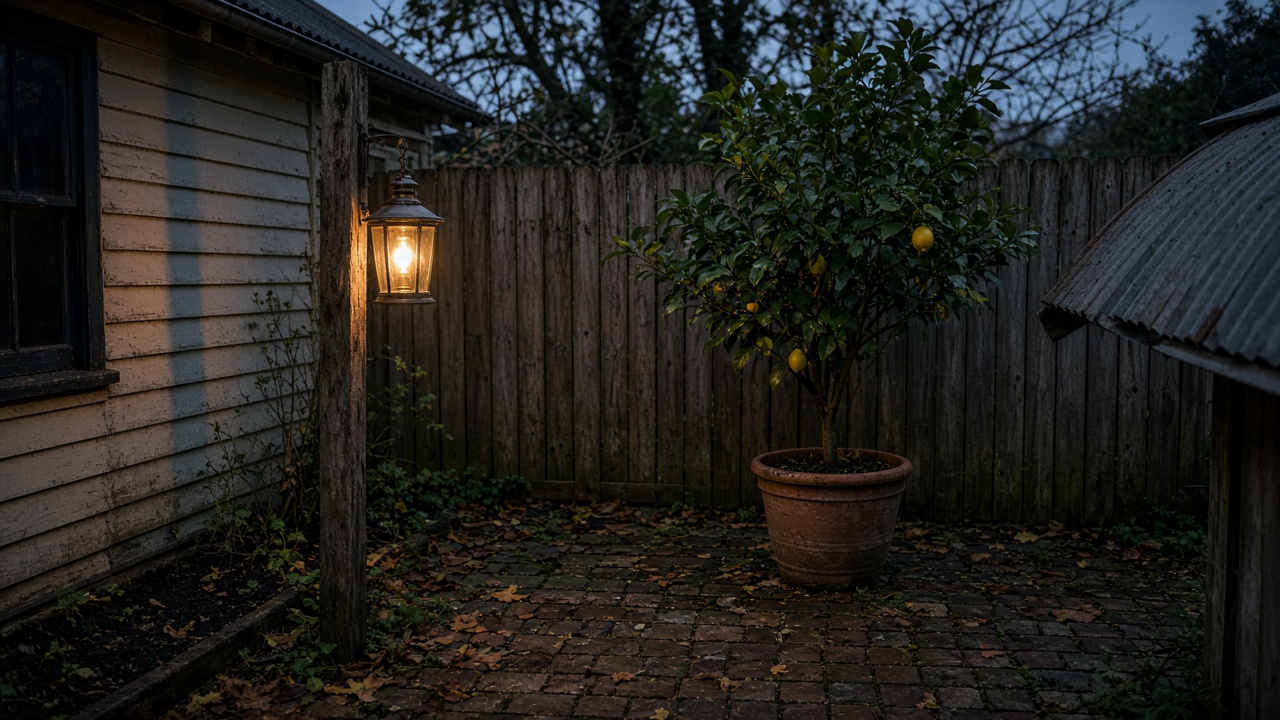
There used to be a conductor. There is not. There is a machine that beeps if you have the card and sulks if you do not. We are not writing about machines. We are writing about the moment the doors fold and the street is suddenly louder than the car, and you step down into a Northcote evening that has already chosen its blue. The walk from the stop to the terrace is eight minutes if you do not meet anyone. You will meet someone. Inner north streets are built for that meeting: the narrow footpath, the bin, the dog, the neighbour who knows the lantern is yours because they can see it from their kitchen.
On a wet Thursday the tracks hold the sky. That is the photograph, if there is one — not the car, not a destination, the wet road and the wires and the trees dropping what they have left. You could be in Brunswick. You could be in Fitzroy. The inner north repeats itself on purpose. Weatherboard, brick, a shop that sells the same pears, a room above a shop with a light on. The tram is how the repetition moves.
We have stood at the Westgarth stop with the bag cutting a line into the fingers and watched the 11 come up the road like a decision being made for us. That is the whole note. Not a network map. Not a complaint. A record of the hour between the grocer and the yard, when the city is still a city and the lantern has not yet been lit. If a dashboard or a message asks you to sign in to collect something from a brand, it is not from this desk. We do not run those cars. We ride the ordinary one.
Home is the key in the sticking lock and the post in the concrete and the glass waiting. The tram does not know about the lantern. That is why we write the two notes next to each other. Mail: [email protected]. The next car is already somewhere on St Georges Road, doing the same honest work for someone else’s bag.